Is It a Mistake to Operate on Triple-Negative Breast Cancer Upfront?
For decades, the traditional sequence of breast cancer treatment was remarkably straightforward: diagnose the malignancy, operate immediately to remove the mass, obtain the final pathology report, and administer adjuvant chemotherapy if the clinical staging required it.
The rise of triple-negative breast cancer (TNBC) has completely upended this historical protocol.
Today, for many patients presenting with aggressive breast malignancies—particularly those diagnosed with Stage II and Stage III disease—proceeding directly to the operating room is an oncological mistake. Going straight to surgery can strip the multidisciplinary medical team of invaluable biological data regarding the tumor's real-time sensitivity to systemic agents, obscure the patient's long-term prognosis, and permanently eliminate the opportunity to deliver response-adapted, life-saving therapies after surgery.
This evolution raises a critical clinical question: In the modern era of precision medicine, should we ever operate on triple-negative breast cancer upfront?
Answering this requires a deep dive into the unique histopathological behavior of TNBC, the molecular mechanics that drive its aggressive profile, and the rapid evolution of modern systemic therapies.
What Is Triple-Negative Breast Cancer?
Triple-negative breast cancer accounts for roughly 15% of all breast cancer diagnoses globally. It is statistically more prevalent in patients diagnosed at a younger age, individuals carrying germline BRCA1 or BRCA2 pathogenic mutations, and certain ancestral populations.
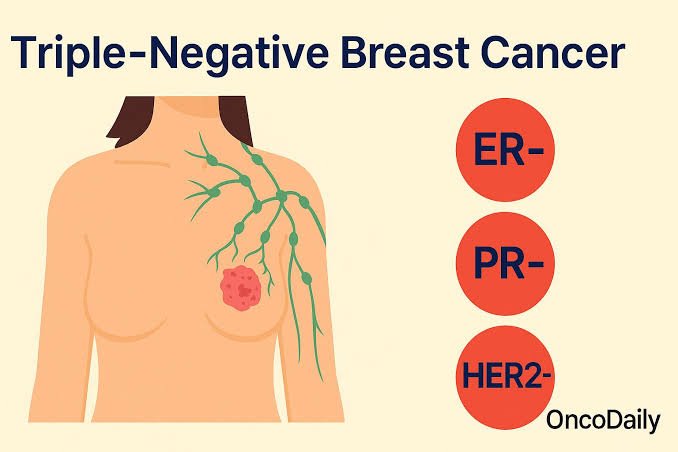
From a clinical diagnostic standpoint, TNBC is pathologically defined by the absolute absence of three routinely assessed therapeutic surface receptors:
- Estrogen Receptor (ER) Expression: Quantified below the established threshold for ER positivity (typically less than 1% staining via immunohistochemistry).
- Progesterone Receptor (PR) Expression: Definitively negative.
- HER2 Status: Negative according to current ASCO/CAP testing criteria (IHC 0, 1+, or 2+ without evidence of gene amplification via in-situ hybridization).
Because these malignancies lack estrogen-receptor-driven signaling pathways and HER2 amplification, standard targeted mechanisms are utterly ineffective. Endocrine therapies (such as tamoxifen or aromatase inhibitors) do not work. Conventional, standard HER2-directed monoclonal antibodies (such as trastuzumab) provide zero therapeutic value.
Historically, this lack of cell-surface targets left oncologists with a singular, blunt systemic weapon: cytotoxic chemotherapy. Yet, as modern molecular profiling reveals, TNBC is not a single, monolithic disease entity. Instead, it represents a highly heterogeneous cluster of distinct biological subtypes united primarily by what they lack rather than by a singular, shared molecular driver.
How Is TNBC Pathologically Different?
When analyzed in the pathology lab, the vast majority of triple-negative breast cancers are categorized as invasive carcinomas of no special type (NST). However, they display distinct, deeply aggressive histopathological deviations compared to luminal, hormone-receptor-positive breast tumors:
- High Nottingham Histologic Grade: Reflecting poorly differentiated cellular structures that have lost their normal architecture.
- Marked Nuclear Pleomorphism and High Mitotic Activity: Demonstrating rapid, erratic, and uncontrolled cell division.
- Elevated Ki-67 Proliferation Index: Often exceeding 40% to 50%, confirming that a massive proportion of the tumor cells are actively replicating at any given moment.
- Geographic Necrosis: Rapidly growing tumor clusters outgrow their localized blood supply, leading to visible zones of cellular death within the tumor core.
- Distinct Morphological Borders: Often displaying pushing or circumscribed tumor margins.
Furthermore, the triple-negative phenotype frequently overlaps with specialized, complex histological variants, such as metaplastic carcinoma (which features chemo-resistant squamous or spindle-cell elements) and carcinomas presenting with distinct medullary features. Ultimately, these features demonstrate why TNBC cannot be evaluated through a single histological lens; it is a clinical and biomarker-defined category encompassing multiple biologically volatile diseases.
Why Is Triple-Negative Breast Cancer So Aggressive?
The highly infiltrative, metastatic nature of TNBC cannot be attributed solely to the absence of ER, PR, and HER2 receptors. At the deep molecular and genomic levels, several key aberrations fuel its hyper-aggressive behavior:
- TP53 Abnormalities: Upwards of 80% of TNBC tumors harbor mutations or structural disruptions in the TP53 gene. This cripples the cell's primary tumor-suppressor mechanism, neutralizing its ability to halt cell division for DNA repair or trigger programmed cell death (apoptosis).
- Basal-Like Molecular Subtype Alignment: Gene-expression profiling shows that most TNBCs align closely with the basal-like molecular subtype, characterized by the expression of low-molecular-weight cytokeratins (CK5/6, CK14, CK17) and epidermal growth factor receptor (EGFR) amplification.
- Homologous Recombination Deficiency (HRD): A significant subset of TNBCs exhibit a phenomenon known as "BRCA-ness." Even in patients who lack an inherited germline mutation, the tumor tissue itself possesses profound defects in the homologous recombination DNA repair pathway. While this allows the tumor to accumulate massive genomic damage and mutate rapidly, it simultaneously creates an exploitable therapeutic vulnerability to DNA-damaging agents like platinum chemotherapies and small-molecule inhibitors.
- An Active Immune Microenvironment: Unlike slow-growing hormone-positive cancers, TNBC often presents with a high density of Tumor-Infiltrating Lymphocytes (TILs) and an elevated expression of immune checkpoint pathways, specifically the Programmed Death-1 (PD-1) and Programmed Death-Ligand 1 (PD-L1) axes. This biological reality provided the fundamental rationale for incorporating immunotherapy into modern protocols.
The Treatment Evolution: From Blind Chemotherapy to Precision Medicine
To understand why upfront surgery is no longer standard for high-risk early-stage disease, one must look at how radically triple-negative breast cancer treatment has transformed over the past few decades.
The Historical Backbone: Systemic Chemotherapy
For years, treatment strategies were determined almost entirely by the anatomical size of the tumor and nodal involvement. Patients routinely had their tumors cut out first, followed by adjuvant chemotherapy utilizing anthracyclines (doxorubicin/epirubicin), cyclophosphamide, and taxanes (paclitaxel/docetaxel). While these fast-dividing cells were sensitive to these cytotoxic drugs, clinicians lacked any method to measure whether the selected regimen was successfully killing an individual patient's cancer cells in real-time.
The Platinum Paradigm Shift
The clinical integration of neoadjuvant chemotherapy for triple-negative breast cancer (giving treatment before surgery) changed everything. Recognizing the role of DNA repair defects led to clinical trials evaluating the addition of platinum agents, specifically carboplatin, directly into the neoadjuvant phase. By introducing cross-linking DNA damage that HRD-deficient tumor cells cannot fix, adding carboplatin significantly elevated the rates of complete tumor eradication prior to surgical resection.
The Immunotherapy Breakthrough: KEYNOTE-522
The definitive turning point in curing early-stage, high-risk TNBC arrived with the integration of immune checkpoint inhibitors. The landmark KEYNOTE-522 trial evaluated the addition of the anti-PD-1 monoclonal antibody, pembrolizumab, to a robust neoadjuvant chemotherapy backbone (carboplatin and paclitaxel followed by an anthracycline regimen), followed by definitive surgery and continued adjuvant pembrolizumab.
The long-term survival data from KEYNOTE-522 established a definitive paradigm shift. The chemo-immunotherapy regimen not only dramatically boosted response rates but demonstrated a profound, statistically significant improvement in overall survival (OS) and event-free survival (EFS). Crucially, a patient's PD-L1 expression status is not required to initiate this regimen in early-stage disease; the survival benefit extends across the intent-to-treat population, making perioperative pembrolizumab the undisputed global standard of care.
Why Upfront Surgery for TNBC is a Critical Error
With advanced chemo-immunotherapy regimens producing historic survival outcomes, rushing a Stage II or Stage III TNBC patient to the operating room removes the structural clinical framework required to individualize their care.
The Precision Oncology Rule: Upfront surgery completely eliminates the only live, in-vivo biomarker test available to measure a tumor's actual sensitivity to systemic treatment.
When a patient undergoes neoadjuvant therapy, the subsequent surgical pathology report provides a direct, definitive answer to a crucial question: Has the patient achieved a pathological complete response (pCR)?
1. The Prognostic Weight of pCR vs. Residual Disease
Achieving a pCR (defined as the complete absence of any remaining invasive cancer cells in the resected breast tissue and sampled regional lymph nodes) is the single most powerful surrogate marker for long-term cure. Patients who achieve pCR have exceptional, highly durable survival rates. Conversely, the presence of residual disease triple-negative breast cancer identifies individuals at an elevated risk for systemic recurrence, providing immediate notice that the treatment plan must be adapted.
2. The Power of Response-Adapted Adjuvant Escalation
If you operate upfront, you see a snapshot of the tumor, but you have no idea if it would have responded to treatment. By utilizing neoadjuvant therapy, the surgical pathology report dictates the exact branching logic of post-neoadjuvant treatment:
- The CREATE-X Protocol: For patients with residual invasive disease after neoadjuvant chemotherapy, the landmark CREATE-X trial demonstrated that adding 6 to 8 cycles of adjuvant, oral capecitabine significantly reduces the risk of recurrence and extends overall survival.
- The OlympiA Protocol & PARP Inhibition: For patients harboring a germline BRCA mutation, the international OlympiA trial proved that administering one year of the oral PARP inhibitor olaparib post-surgery drastically reduces recurrence risks in high-risk early breast cancer.
- The Modern Adjuvant Crossroad: In the contemporary clinic, clinicians balance these escalations alongside adjuvant pembrolizumab, tailoring post-surgical therapy directly to the absolute volume of remaining disease (often quantified via the Residual Cancer Burden, or RCB index). If you operate upfront, this entire risk-stratified treatment pathway is lost.
3. In-Vivo Downstaging and Surgical De-escalation
TNBC's rapid growth often leads to large primary masses and early axillary lymph node involvement. Upfront surgery frequently necessitates highly invasive, disfiguring procedures, such as total radical mastectomies and full axillary lymph node dissections, which carry a lifelong risk of debilitating lymphedema. Neoadjuvant therapy frequently downstages local disease, melting away tumor margins and clearing positive lymph nodes. This converts aggressive, inoperable presentations into successful, breast-conserving lumpectomies and targeted sentinel lymph node biopsies.
Note: While neoadjuvant therapy is the standard for Stage II and III disease, upfront surgery remains clinically appropriate for small, clinically node-negative, Stage I tumors (typically under 1 to 2 cm) where the risk-benefit ratio of intensive pre-operative chemo-immunotherapy must be carefully balanced via multidisciplinary consultation.
The Advanced Frontier: Beyond Capecitabine and PARP Inhibitors
The revolution in triple-negative breast cancer treatment guidelines has advanced far beyond standard cytotoxic drugs, oral anti-metabolites, and initial targeted agents.
The Revolution of Antibody-Drug Conjugates (ADCs)
The most transformative milestone in recent oncology is the deployment of antibody-drug conjugates breast cancer therapies—frequently described as cellular guided missiles. These specialized compounds tie a highly potent, cytotoxic payload directly to a targeted monoclonal antibody via a cleavable chemical linker.
- Sacituzumab Govitecan: This groundbreaking ADC targets TROP-2, a cell-surface glycoprotein overexpressed in the vast majority of triple-negative breast tumors. Once bound, the ADC is internalized, releasing its highly active payload (SN-38, a topoisomerase I inhibitor) directly into the cancer cell's nucleus. It further exerts a powerful "bystander effect," passing through local membranes to destroy adjacent, antigen-negative tumor cells. Sacituzumab govitecan initially established unprecedented survival extensions in heavily pre-treated metastatic TNBC settings and has rapidly moved into earlier lines of treatment.
- Trastuzumab Deruxtecan (T-DXd): This agent has rewritten conventional pathology definitions. Historically, breast cancers were strictly binary: HER2-positive or HER2-negative. T-DXd has shattered this categorization by demonstrating profound clinical efficacy in "HER2-low" and "HER2-ultralow" tumors (IHC 1+ or IHC 2+ without amplification). This means a massive portion of patients previously labeled as strictly triple-negative can now access highly targeted, ultra-potent ADC therapies.
Molecular Biomarker Testing in Metastatic Disease
In advanced or recurrent metastatic TNBC, treating blindly with standard chemotherapy is completely obsolete. Modern clinical guidelines demand comprehensive, multi-platform molecular testing triple-negative breast cancer protocols at the time of advanced diagnosis. Depending on the exact presentation, tissue and liquid biopsies are utilized to map a highly individualized treatment pathway:
| Identified Biomarker | Targetable Therapeutic Opportunity | Clinical Significance |
|---|---|---|
| PD-L1 Expression (CPS ≥ 10) | First-line Pembrolizumab + Chemotherapy / ADC | Re-activates systemic T-cell surveillance to drive durable, long-term remission. |
| Germline BRCA1/2 Mutations | PARP Inhibitors (Olaparib, Talazoparib) | Induces synthetic lethality by completely disabling all available DNA repair pathways. |
| HER2-Low / Ultralow Status | Trastuzumab Deruxtecan (T-DXd) | Expands targeted biological alternatives to a massive cohort of historically "negative" patients. |
| High TMB / MSI-High / dMMR | Specialized Immune Checkpoint Blockade | Exploits high neoantigen expression profiles for durable immunotherapy responses. |
Conclusion: The Modern Oncological Imperative
The paradigm of managing triple-negative breast cancer has transitioned through three distinct eras:
- The Blunt-Force Era: Guided entirely by anatomical staging, relying on upfront surgical extraction followed by non-targeted, highly toxic adjuvant chemotherapy backbones.
- The Response-Adapted Era: Recognizing the vital prognostic value of pathological complete responses and validating post-surgical capecitabine or PARP inhibition to clear residual disease.
- The Modern Precision Frontier: Integrating perioperative immunotherapy independent of PD-L1 markers for early-stage disease and deploying targeted antibody-drug conjugates (ADCs) to transform survival metrics across diverse molecular profiles.
When a patient is diagnosed with an aggressive, triple-negative breast mass, the most critical question is no longer, "How quickly can we schedule the surgery?" Instead, the mandatory clinical question must be: "What advanced systemic therapy must this patient receive before surgery, and how will their tumor's physical response guide our subsequent steps toward a definitive cure?"
For comprehensive, state-of-the-art diagnostic evaluations and personalized multi-disciplinary care maps, consulting specialized centers executing cutting-edge oncological protocols remains the single most important step in altering a patient's long-term survival trajectory.
Frequently Asked Questions (FAQs)
Why is triple-negative breast cancer aggressive?
TNBC exhibits aggressive clinical behavior because it lacks regulatory surface receptors (ER, PR, and HER2), possesses a high cellular proliferation index (Ki-67), frequently harbors TP53 gene alterations, and exhibits significant genomic instability. This allows the cells to rapidly divide, bypass natural cellular death mechanisms, and undergo early epithelial-mesenchymal transitions, resulting in a higher propensity for early visceral metastasis to organs like the lungs, liver, and brain.
Should triple-negative breast cancer be treated with surgery first?
For the majority of Stage II and Stage III triple-negative breast cancers, surgery should not be performed first. Administering neoadjuvant (pre-operative) chemo-immunotherapy is the global standard of care. This approach allows clinicians to evaluate the tumor's sensitivity to treatment in real-time, downstage local disease to allow for breast-conserving surgery, and use the presence or absence of residual disease on the pathology report to customize post-surgical therapies. Upfront surgery is typically reserved only for small, clinically node-negative Stage I tumors.
What is the best treatment for triple-negative breast cancer?
The optimal treatment depends entirely on the stage and molecular profile of the disease. For early-stage, high-risk TNBC, the global gold standard is the KEYNOTE-522 regimen, consisting of neoadjuvant chemotherapy (carboplatin, paclitaxel, and an anthracycline backbone) combined with the immunotherapy agent pembrolizumab, followed by definitive surgery and adjuvant pembrolizumab. For advanced or metastatic disease, the best treatment is dictated by biomarker testing, which may include targeted antibody-drug conjugates (ADCs) like sacituzumab govitecan, PARP inhibitors for BRCA mutations, or targeted immunotherapy.
When is pembrolizumab used in triple-negative breast cancer?
In early-stage, high-risk TNBC (Stage II and III), pembrolizumab is integrated into both the pre-operative (neoadjuvant) and post-operative (adjuvant) phases as part of the KEYNOTE-522 protocol, regardless of the tumor's PD-L1 expression. In the recurrent or metastatic setting, pembrolizumab is utilized in the first-line setting combined with systemic chemotherapy, but its use is strictly contingent on the tumor testing positive for PD-L1 expression with a Combined Positive Score (CPS) of 10 or greater.
What happens if residual cancer remains after neoadjuvant chemotherapy?
If the surgical pathology report reveals residual invasive cancer cells in the breast or lymph nodes following neoadjuvant therapy, it indicates a higher risk of future recurrence. However, this finding allows the oncology team to escalate care using a response-adapted approach. Depending on the patient's genetic profile, they will be prescribed up to a year of oral capecitabine (per the CREATE-X trial data) or the targeted PARP inhibitor olaparib (per the OlympiA trial data for germline BRCA mutation carriers) to aggressively clear any remaining micrometastatic disease.
Who should receive olaparib for breast cancer?
Olaparib is an oral PARP inhibitor specifically indicated for patients who carry an inherited, germline BRCA1 or BRCA2 pathogenic mutation. In the early-stage setting, it is prescribed for one year following local surgery and chemotherapy for individuals presenting with high-risk features or substantial residual disease after neoadjuvant systemic therapy, as proven by the overall survival benefits demonstrated in the landmark OlympiA trial.

How to Read a Breast Cancer Pathology Report: A Practical Guide for Clinicians
Is It a Mistake to Operate on Triple-Negative Breast Cancer Upfront?
Best Cancer Surgeon in Mysore – How to find one; 7 points Patients Should Know Before Choosing a Surgeon

10 Powerful Cancer prevention tips – A Doctor’s Guide to a Healthier Life