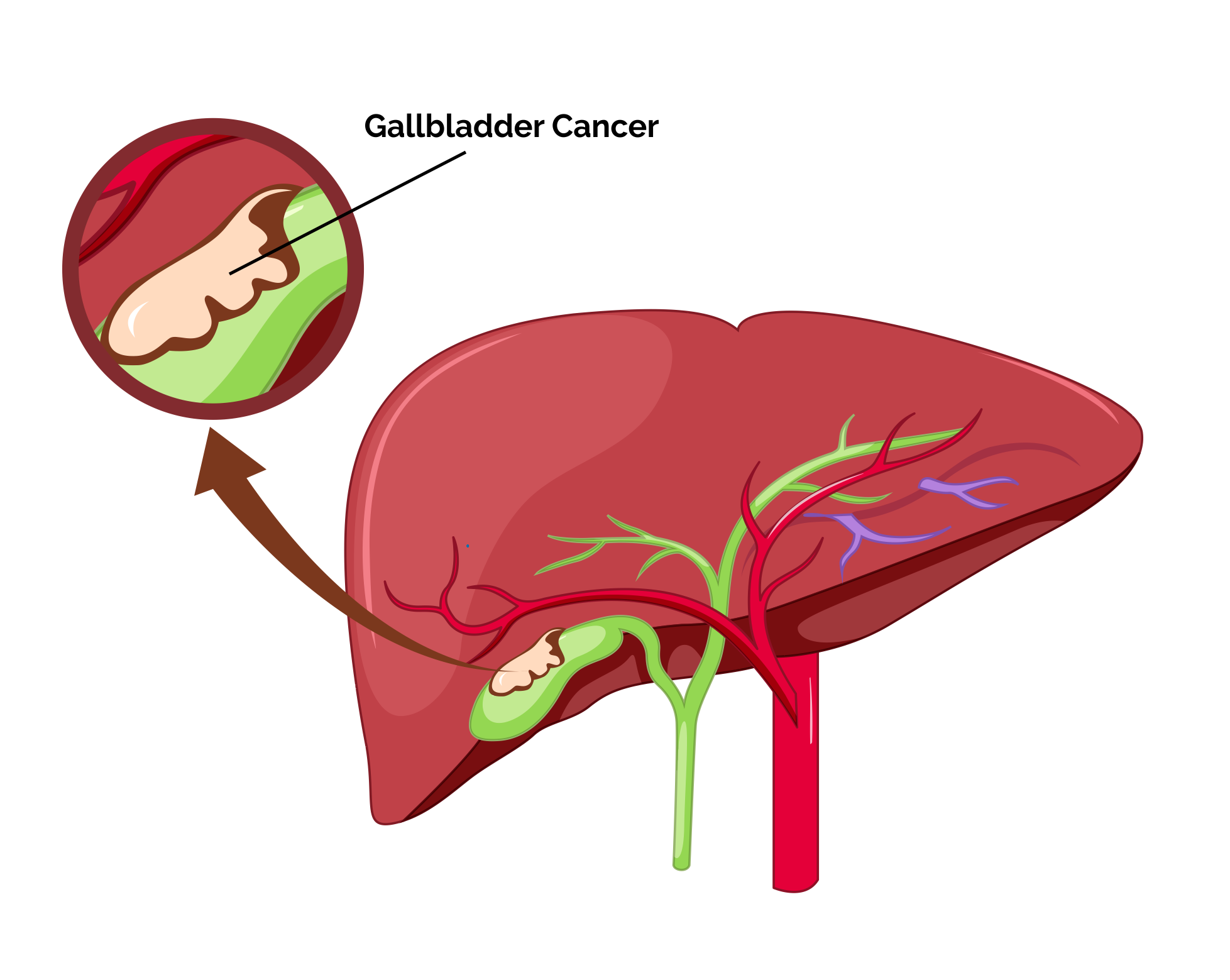
Gallbladder Cancer
Gallbladder cancer is a rare but aggressive cancer that begins in the tissues of the gallbladder — a small, pear-shaped organ located under the liver. The gallbladder stores bile, a digestive fluid that helps break down fats.
Gallbladder cancer often goes undetected in its early stages because symptoms are vague or absent. According to the World Health Organization, early detection significantly improves survival outcomes, but most cases are diagnosed at advanced stages.
Types of Gallbladder Cancer
The most common type is:
- Adenocarcinoma: Starts in the glandular cells lining the gallbladder (accounts for most cases).
Other rare types include:
- Squamous cell carcinoma
- Neuroendocrine tumors
- Sarcomas
Risk Factors for Gallbladder Cancer
Certain factors increase the risk:
- Gallstones (most common risk factor)
- Chronic gallbladder inflammation
- Porcelain gallbladder
- Gallbladder polyps larger than 1 cm
- Obesity
- Female gender
- Age above 60
- Family history
Gallbladder cancer is more common in women and in certain geographic regions.
Symptoms of Gallbladder Cancer
Early-stage cancer may not cause symptoms. As the disease progresses, patients may experience:
- Persistent abdominal pain (right upper side)
- Nausea and vomiting
- Jaundice (yellowing of skin and eyes)
- Unexplained weight loss
- Loss of appetite
- Abdominal swelling
- Fever
If you experience persistent symptoms, consult a doctor promptly.
How Is Gallbladder Cancer Diagnosed?
Doctors may recommend:
- Blood Tests: Liver function tests and tumor markers (CA 19-9, CEA)
- Imaging Tests: Ultrasound, CT scan, MRI, or PET scan (in advanced cases)
- Biopsy: Confirms cancer diagnosis and type
Sometimes gallbladder cancer is discovered incidentally after gallbladder removal surgery (cholecystectomy) for gallstones.
Stages of Gallbladder Cancer
- Stage I: Confined to the inner layers of the gallbladder
- Stage II: Spread to muscle layer
- Stage III: Spread to nearby organs or lymph nodes
- Stage IV: Distant spread (metastasis)
Treatment depends on the stage of the disease.
Treatment Options for Gallbladder Cancer
- Surgery: Surgery is the primary treatment if cancer is detected early. Types include simple cholecystectomy (removal of gallbladder) and extended (radical) cholecystectomy (removal of part of liver and lymph nodes). Early-stage cancers may be cured with surgery.
- Chemotherapy: Uses anti-cancer drugs to destroy cancer cells. It may be given after surgery (adjuvant therapy), before surgery (neoadjuvant therapy), or for advanced or metastatic cancer.
- Radiation Therapy: May be used after surgery to reduce recurrence risk or to relieve symptoms in advanced stages.
- Targeted Therapy & Immunotherapy: In selected cases, targeted drugs or immunotherapy may be recommended based on genetic testing.
Complications of Advanced Gallbladder Cancer
- Bile duct obstruction
- Liver failure
- Severe pain
- Weight loss and weakness
Palliative care helps improve comfort and quality of life in advanced cases.
Prognosis and Survival Rate
Prognosis depends on stage at diagnosis, tumor size, spread to lymph nodes, and overall health. Early-stage detection significantly improves survival rates. Unfortunately, many cases are diagnosed late due to lack of early symptoms.
Prevention Tips
Although gallbladder cancer cannot always be prevented, you can reduce risk by:
- Maintaining healthy weight
- Treating gallstones promptly
- Eating a high-fiber diet
- Avoiding smoking
- Regular health checkups
When to See a Doctor
Seek medical attention if you experience:
- Persistent right upper abdominal pain
- Jaundice
- Unexplained weight loss
- Recurrent gallbladder infections
- Large gallbladder polyps
Early evaluation saves lives.