By Dr. Jayakarthik Y, Surgical Oncologist
Karthik Oncocare Clinic, Mysuru
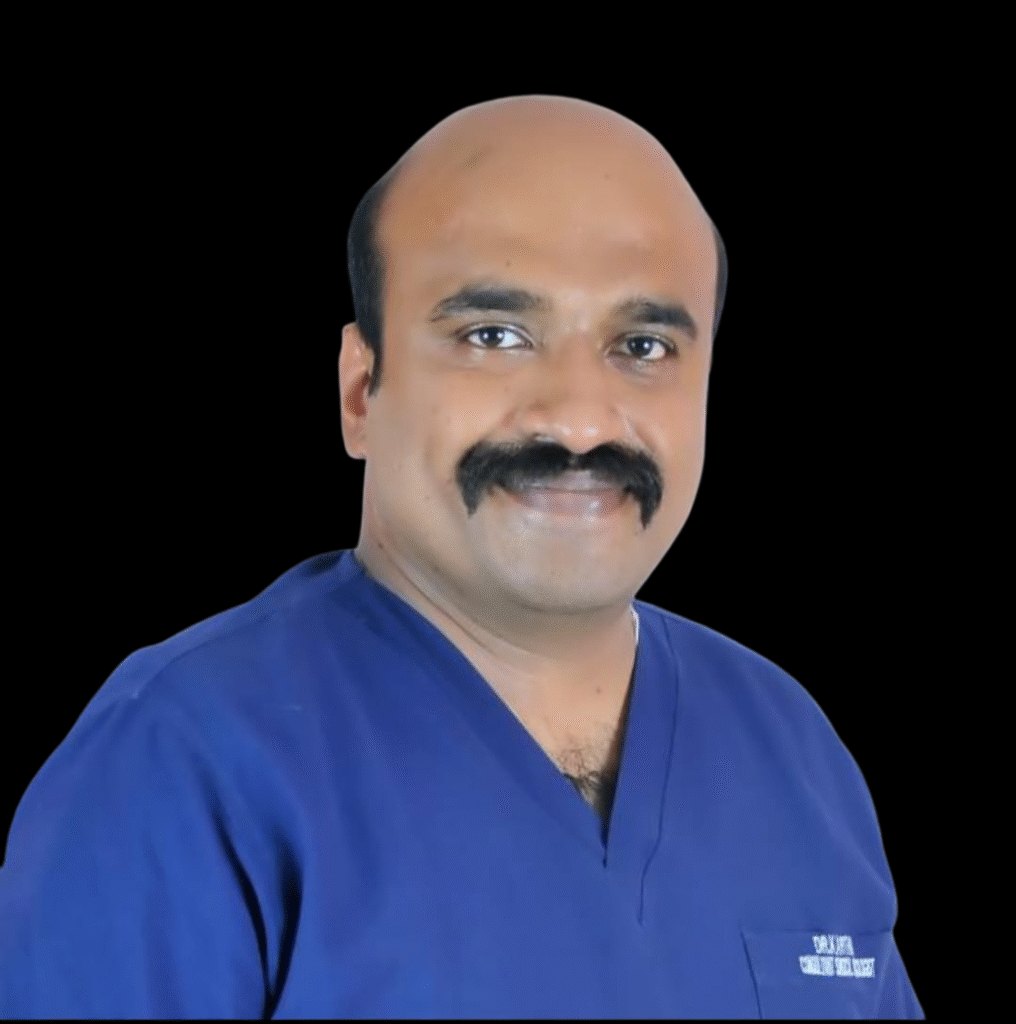
As a cancer specialist, I’ve met hundreds of patients with different cancers — each with its own story. In this article, I’ve decoded why cancer isn’t one disease, but a collection of many, each needing its own treatment and understanding
Many people believe cancer is a single illness that behaves the same way in everyone.
But the truth is, cancer isn’t one disease — it’s a collection of hundreds of diseases, each with its own nature, personality, and pattern.
Understanding this is the first step toward the right cancer treatment — and toward hope.
1. Cancer is not one disease — every patient’s cancer behaves differently
In everyday conversations, we refer to “cancer” as though it’s one condition.
In reality, even two patients diagnosed with the same type of cancer — like breast or colon cancer — can have completely different forms of the disease.
One woman’s breast cancer may be slow-growing, hormone-sensitive, and treated successfully with tablets.
Another woman’s may be aggressive and need chemotherapy or targeted therapy.
Both are called “breast cancer,” but they behave like two separate illnesses.
That’s why no two patients’ cancer stories are the same — and why comparing one person’s recovery or outcome with another’s can be misleading.
Cancer follows its own biology — not someone else’s pattern.
2. A cancer specialist explains how every cancer starts inside a cell
As an oncologist, I often explain that all cancers begin in a single cell that forgets how to behave.
Normal cells listen to the body’s commands to stop growing or to repair themselves when damaged.
Cancer cells stop listening. They grow uncontrollably and sometimes spread to other organs.
But why this happens differs for every patient.
Some cancers are driven by genetic mutations, others by environmental exposures, hormones, infections, or simply by chance.
This is why lung cancer in a smoker and lung cancer in a lifelong non-smoker behave completely differently — they are biologically distinct diseases that arise in the same organ.
There are many types of cancer, and each has its own growth rate, behavior, and response to treatment.
3. Decoding Why Two Patients with the Same Cancer Have Different Outcomes
One of the hardest parts of my job as a cancer surgeon is explaining why two people with “the same cancer” have very different outcomes.
It isn’t always about luck — it’s about biology.
Take colon cancer as an example.
In one person, surgery alone may cure it completely.
In another, it may silently spread to the liver before showing any symptoms.
The difference lies in the microscopic and molecular features of the tumor — things that we can’t see with the naked eye, but which decide how aggressive the cancer is.
This is the foundation of personalized cancer treatment — tailoring the therapy to match the exact genetic and biological fingerprint of each patient’s cancer.
4. Cancer treatment is more than medicines — it’s also about people
Every oncologist/cancer specialist knows that the story of cancer isn’t just about cells — it’s about people.
Two patients with the same stage of disease may face their journeys very differently.
One may battle with quiet courage and faith, while another may struggle with fear, exhaustion, or financial pressure.
The success of cancer treatment depends not only on surgery, chemotherapy, or radiation — but also on emotional strength, support systems, and mindset.
That’s why it’s so important to treat not just the disease, but the person living with it.
5. Modern oncologists use personalized cancer treatment to improve outcomes
Cancer care has evolved dramatically.
Today, oncologists use advanced diagnostics to study the genes, receptors, and mutations that drive each cancer.
Cancer surgeons perform minimally invasive and organ-preserving procedures that help patients recover faster and live better.
Targeted drugs and immunotherapy are transforming how we treat even advanced cancers.
All these advancements point to one truth:
Every patient’s cancer is unique — and so should be their treatment plan.
6. A message from a cancer surgeon — your story with cancer is unique
As a cancer surgeon, I’ve learned that no two cancer journeys are alike.
Each story teaches me something new — about resilience, faith, and the will to live.
Some stories end with cure, others with long-term control — but all remind us that hope is stronger than fear.
The takeaway
So, the next time you hear that someone has cancer, remember this:
It’s not the cancer — it’s their cancer.
A disease shaped by biology, yes — but also by their choices, strength, and relationships.
Is cancer curable?
For many patients today — yes.
And for others, modern medicine offers control, comfort, and quality of life beyond what was once imaginable.
Cancer, when truly decoded, is not one enemy — but a thousand unique challenges, each met with science, strength, and hope.
Cancer is not one monster.
It’s a thousand different diseases, faced by a thousand different people — each writing their own story of courage and survival.
Science gives us the tools.
Stories give us meaning.
And together, they give us hope.
Dr. Jayakarthik Y
Surgical Oncologist & Cancer Specialist
Karthik Oncocare clinic